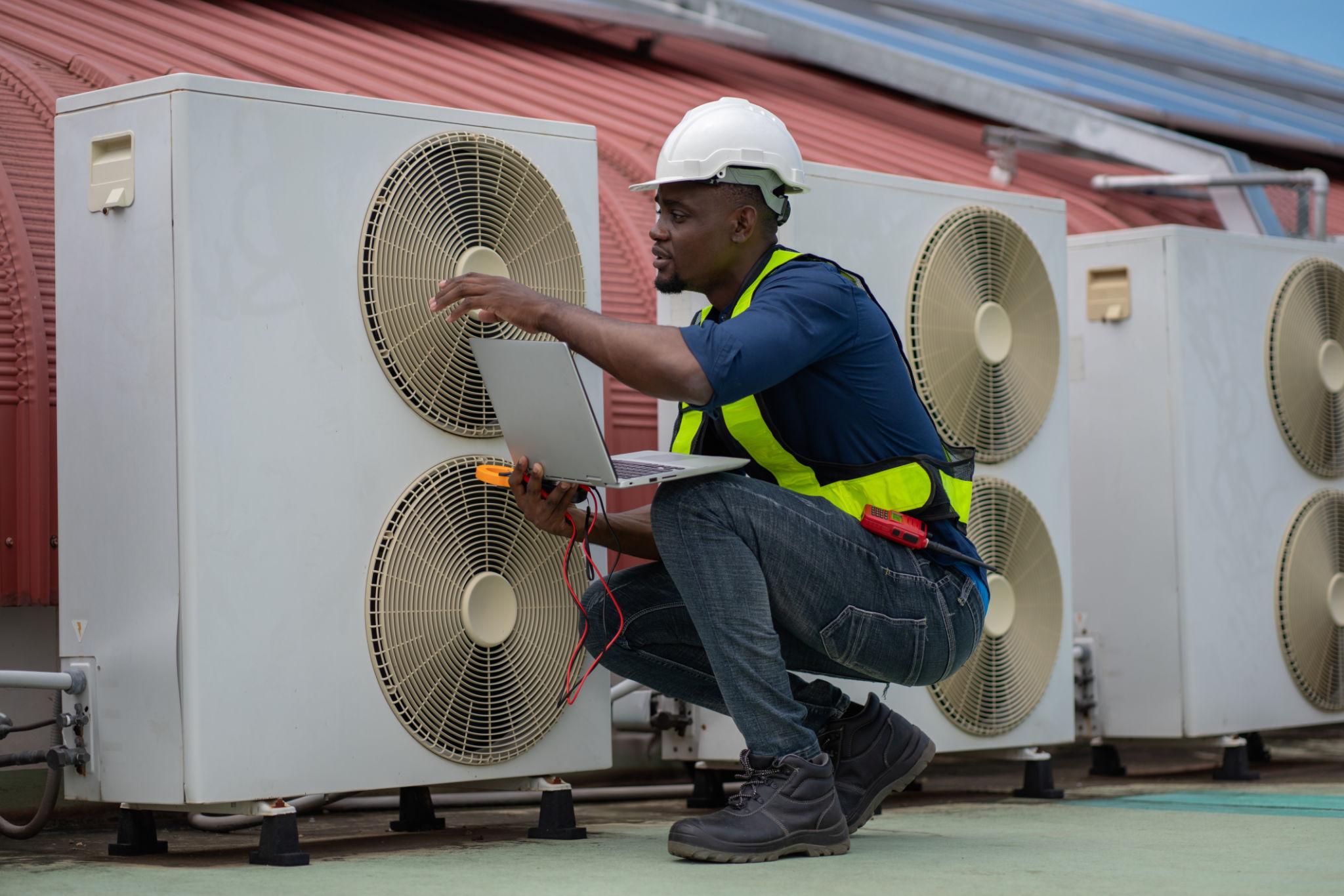
Industrial facilities depend on consistent indoor conditions to keep operations running without interruption. Temperature, airflow, and air quality all play a role in protecting equipment and supporting daily productivity. When these systems are not installed or maintained correctly, performance drops and operating costs can rise.
At Ed Rike Plumbing heating & Air, we provide HVAC services designed to support complex industrial environments. As an HVAC company with experienced HVAC contractors, we understand how system design, installation, and ongoing care work together. Every HVAC technician on our team focuses on accuracy, safety, and long-term system performance.
This blog outlines practical HVAC maintenance and installation insights you can apply to your facility. You will learn how HVAC systems are built, maintained, and supported in industrial settings. With the right approach, you can improve efficiency, reduce breakdowns, and extend the life of your system.
Industrial HVAC Systems in Modern Facilities
Why do industrial HVAC systems matter?
They maintain stable indoor conditions that support equipment performance, worker safety, and consistent operations.
Industrial HVAC systems regulate temperature, airflow, and humidity in environments where even small changes can affect output. You depend on these systems to keep operations steady and protect equipment from overheating or moisture-related damage. Reliable HVAC services also help maintain indoor air quality across large spaces.
When HVAC systems operate correctly, you see fewer interruptions and more predictable performance. That is why working with experienced HVAC contractors matters. A qualified technician evaluates system load, airflow, and control settings to keep everything aligned with your facility’s requirements.
At Ed Rike Plumbing Heating & Air, our HVAC maintenance approach focuses on system stability, helping your equipment run under controlled conditions without unnecessary strain.
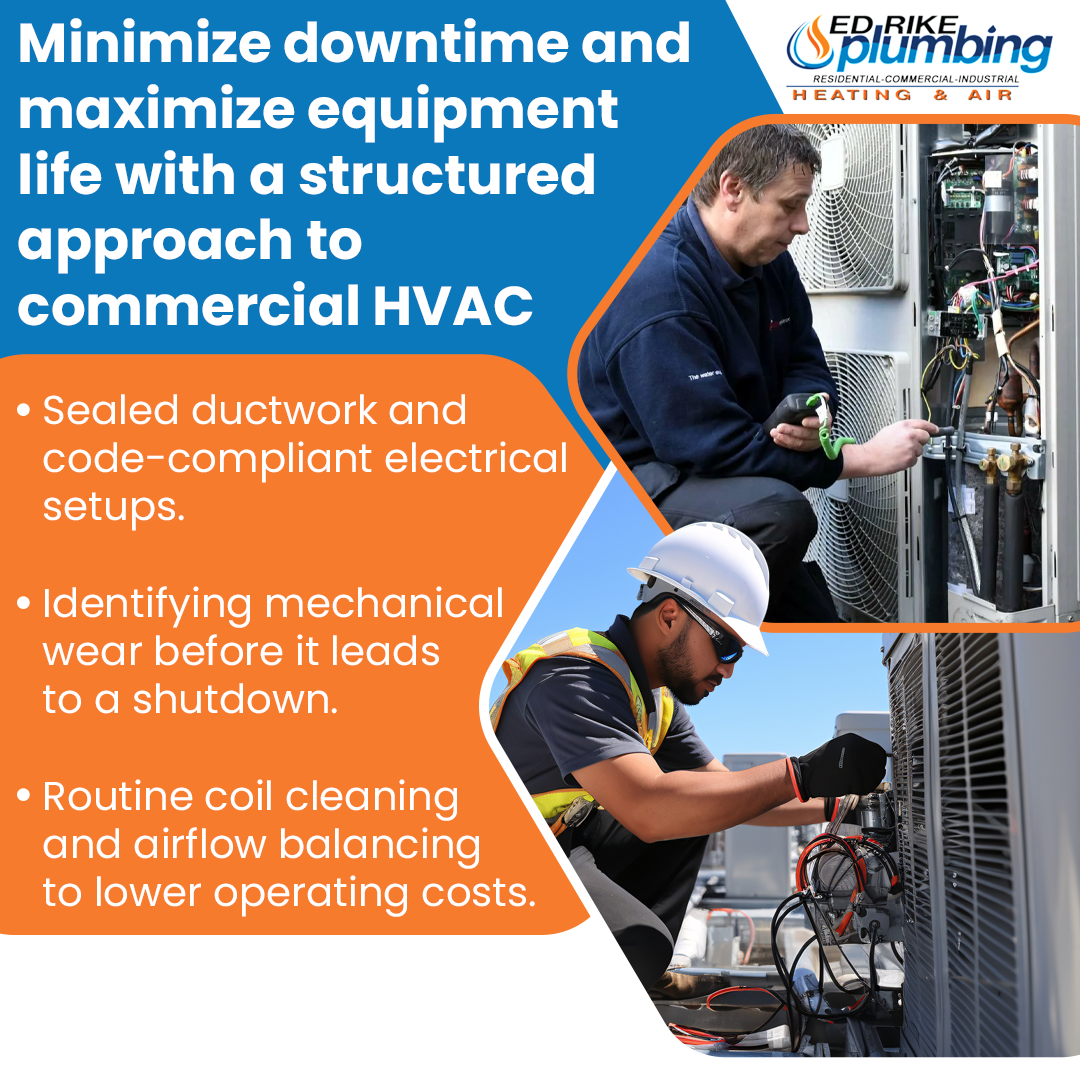
Industrial HVAC Design Before Installation
What is HVAC load calculation?
It determines the required heating and cooling capacity based on building data.
You rely on accurate load calculation to match system output with your facility’s needs. It uses factors such as building size, equipment heat load, occupancy, ventilation requirements, and local climate data to determine system capacity. This helps the contractors choose systems that avoid strain and maintain steady performance.
A technician in Dayton reviews these inputs before recommending equipment through professional services. This approach supports balanced operation and aligns with how your system will be used day to day.
Why does airflow design matter?
It controls air movement to maintain even temperature distribution.
Key elements include:
- Proper duct sizing
- Zoning across areas
- Balanced air pressure
How does energy planning affect HVAC systems?
It lowers energy use by selecting efficient components and system layouts.
At Ed Rike Plumbing Heating & Air, our company’s approach focuses on practical design that supports system reliability and long-term performance.
HVAC Installation Practices Used by Contractors
What defines proper HVAC installation?
Proper installation relies on the correct alignment, sealing, and calibration of system components.
You depend on experienced contractors to set up systems that match your facility’s requirements. During installation, attention goes to duct sealing, refrigerant levels, and electrical connections. Each step affects how your system performs over time.
A technician working through the structured services follows measured procedures, not assumptions. This approach supports consistent airflow and stable operation. Poor sealing or incorrect wiring can lead to system strain and higher maintenance needs.
What is a Building Management System (BMS)?
A BMS is a centralized platform that monitors and manages HVAC systems along with other building functions such as energy use, lighting, and security in large facilities.
It allows you to:
- Monitor system performance in real time
- Adjust temperature settings remotely
- Manage multiple units from one platform
Why must HVAC installation follow safety codes?
Compliance with safety codes supports safe and reliable system operation.
Installation standards such as the National Electrical Code guide wiring, airflow, and system setup. Our company follows these practices to support reliable outcomes during HVAC maintenance and installation work.
Role of HVAC Technicians in Industrial Systems
What do HVAC technicians do in industrial settings?
They install, diagnose, and maintain HVAC systems while following set performance and safety standards.
You rely on an HVAC technician to keep your system operating within expected parameters. Their work includes diagnostics, repairs, and performance tuning across large-scale systems. Each task supports steady airflow and balanced temperature control.
Through structured services, HVAC contractors follow clear steps that focus on system function and reliability. Our company’s approach supports careful inspections and practical solutions. HVAC maintenance tasks also fall under their scope, helping reduce wear and keep systems responsive over time.
Why is calibration important?
Calibration aligns system components with required performance settings.
Technicians calibrate:
- Thermostats
- Sensors
- Airflow systems
Proper calibration helps maintain consistent conditions across different zones and supports steady operation in industrial spaces.
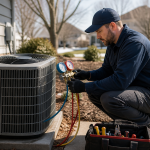
 air conditioning units and electrical components to ensure proper system performance and balance” width=”600″ height=”600″ />
Industrial HVAC Maintenance Practices
What is preventive HVAC maintenance?
It is a scheduled service that addresses system issues before they disrupt operations.
You rely on HVAC contractors to inspect key parts of your system. Preventive maintenance includes cleaning filters, checking electrical connections, and reviewing system pressure. These steps support steady airflow and balanced output.
With structured HVAC services, a technician follows planned checks that help reduce wear. Preventive maintenance is widely recognized to reduce unexpected equipment failures and improve system reliability when performed consistently, according to industry organizations such as ASHRAE and the U.S. Department of Energy. This approach keeps daily operations steady.
What is predictive maintenance?
It uses data to detect early system changes.
Tools include:
- IoT sensors
- Remote monitoring systems
- Performance analytics
What does seasonal maintenance include?
It prepares systems for changing weather.
- Cooling prep
- Heating inspection
- Airflow checks
We deliver practical HVAC maintenance.
Risks in Industrial HVAC Systems
What affects indoor air quality?
You see air quality drop as contaminants build up inside the system.
Dust, moisture, and outside pollutants move through ductwork and affect airflow. A technician working with HVAC contractors reviews how these elements settle and impact system performance. Without proper maintenance, buildup can interfere with the services and reduce output.
Common factors include:
- Dust in ducts
- Moisture leading to mold
- External pollutants in ventilation
What causes HVAC inefficiency?
You notice inefficiency through system strain and uneven output.
- Air leaks
- Worn compressors
- Faulty thermostats
What is a system imbalance?
It shows uneven airflow or temperature differences.
- Uneven temperatures
- Irregular airflow
- Pressure variations
We focus on reliable HVAC services that support system performance.
Common HVAC Mistakes
What happens with improper system sizing?
You experience uneven performance and added strain when the system size does not match demand.
A technician reviews load requirements, yet sizing errors can still occur. Oversized systems cycle frequently, while undersized systems run longer and wear faster. Both conditions affect efficiency and system stability.
The contractors address this during installation, but corrections may be needed later through professional services.
Why is maintenance sometimes skipped?
You may delay service to reduce short-term costs, which leads to higher repair needs.
Common issues include:
- Dirty filters restricting airflow
- Clogged coils lower efficiency
- Electrical wear over time
We focus on consistent maintenance for stable performance.
Extending HVAC System Lifespan
How does maintenance extend system life?
You extend system life by reducing wear and keeping components within safe operating limits.
Regular maintenance helps you avoid unnecessary strain on key parts. An HVAC technician inspects, cleans, and replaces components before damage spreads. This approach supports steady system performance and reduces unexpected downtime.
Through structured services, the contractors focus on:
- Cleaning components to reduce buildup
- Replacing worn parts early
- Monitoring system performance over time
Why is maintenance documentation important?
You track system history to support long-term planning and consistent performance.
Accurate records help you:
- Log service dates
- Track repairs
- Identify recurring issues
We use documentation to support ongoing system reliability.
Impact of HVAC Systems on Business Operations
How does HVAC affect productivity?
Stable indoor conditions can support productivity by creating a more comfortable and controlled working environment.
Your team performs better in controlled environments where temperature and airflow stay balanced. An HVAC technician helps keep systems running within expected ranges, which supports equipment operation and reduces interruptions.
With reliable HVAC services, contractors focus on maintaining steady conditions that allow daily tasks to continue without disruption.
How does HVAC affect costs?
Efficient and well-maintained HVAC systems can help reduce operating costs by improving energy performance and minimizing repair needs.
Efficient HVAC maintenance helps you:
- Lower energy usage
- Reduce repair frequency
- Extend equipment lifespan
Our HVAC company‘s approach focuses on practical solutions that support both performance and cost control.
Choosing an HVAC Company and Contractors
What should you look for in HVAC contractors?
Focus on experience, certifications, and a consistent service record.
You rely on the contractors who understand system demands and follow structured HVAC services. A technician with proper training can identify issues early and support stable performance over time.
Key factors include:
- Technical certifications
- Industrial system experience
- Proven service history
These elements show how an HVAC company handles installation, repairs, and maintenance across different environments.
Why does local experience matter?
You benefit from faster response and familiarity with regional conditions.
Local teams can:
- Respond quickly to service calls
- Work within local codes
- Adapt systems to climate conditions
At Ed Rike Plumbing Heating & Air, our HVAC company focuses on practical service backed by local experience.
Final Note
You maintain reliable system performance through proper installation and consistent service.
Industrial systems depend on accurate setup and routine maintenance to operate without disruption. An experienced technician supports system stability by identifying issues early and keeping components working within expected limits.
With structured services, the contractors focus on performance, efficiency, and long-term operation. You benefit from reduced downtime and controlled operating costs when systems receive regular attention.
Key outcomes include:
- Stable temperature and airflow
- Reduced system strain
- Lower repair frequency
At Ed Rike Plumbing Heating & Air, our HVAC company focuses on practical service approaches that support long-term system reliability without unnecessary complexity.
Take the Next Step with Reliable Industrial HVAC Support
You can keep your facility running with stable performance by working with a team that understands your system requirements. If you need professional HVAC services, timely maintenance, or support from experienced contractors, now is the time to act.
At Ed Rike Plumbing Heating & Air, we focus on practical solutions that support your daily operations and long-term system performance. Every technician on our team is ready to help you address system concerns before they affect your workflow.
Call us at (937) 962-2939 or email carrie.lunsford@edrikeplumbing.com to schedule your service today.
Take control of your system performance with a trusted HVAC company that supports your operations.