
Summer in Dayton brings cookouts, full houses, and a kitchen sink that never gets a break. It also puts your garbage disposal under more strain than any other time of year. The wrong foods, poured grease, and overloaded drains are some of the most common reasons homeowners call a plumber once the warm months hit.
Some clogs are minor. Others are the start of something worse, from backed-up drain lines to problems that require full sewer line repair. Knowing which situation you are dealing with makes a real difference in how fast you can fix it and how much it costs.
At Ed Rike Plumbing Heating & Air, we have been helping Dayton-area homeowners sort out exactly these kinds of problems since 1992. This guide covers what causes disposal overloads in summer and when it is time to call for help.
Why Summer Is Hard on Garbage Disposals
Your garbage disposal handles everyday scraps. It is not built for summer party cleanup.
When Dayton households host cookouts, the volume and type of food waste going down the drain go up fast. Corn husks, watermelon rinds, rib bones, cooking grease, and fruit pits all find their way into the kitchen sink. Each one puts extra strain on the disposal motor and the drain line behind it.
The problem is not just one heavy meal. It is the repeated buildup over a full summer of heavier-than-normal kitchen use. Food particles and grease accumulate along the walls of your drain pipes. Over time, that buildup narrows the pipe opening and slows drainage. Left alone, it eventually causes a full blockage.
Foods That Cause the Most Damage
Not all food waste causes clogs equally. Some items are far more likely to jam the disposal or clog the drain line.
Grease and cooking oils are among the top offenders. Hot grease feels harmless going down the drain, but it cools and hardens inside your pipes. Over time, it forms a thick buildup that traps food debris and restricts flow.
Fibrous vegetables like corn husks, celery, asparagus, and onion skins wrap around disposal blades instead of grinding down. They can tangle the motor and create a jam that prevents the unit from running at all.
Starchy foods, including potato peels, pasta, rice, and bread, absorb water and expand inside your pipes. They turn into a dense, paste-like blockage that is difficult to clear without professional equipment.
Bones, fruit pits, and hard rinds are too dense for most residential disposals to break down. They can crack or dull the grinding components, and larger pieces end up in the drain line, where they collect debris.
Eggshells and coffee grounds seem harmless because they are fine in texture, but they accumulate in pipe traps and form a gritty sediment that contributes to clogs over time.
Signs Your Disposal or Drain Is Struggling
Your kitchen plumbing usually gives clear signals before a clog becomes a serious problem. Watch for these warning signs during the summer months.
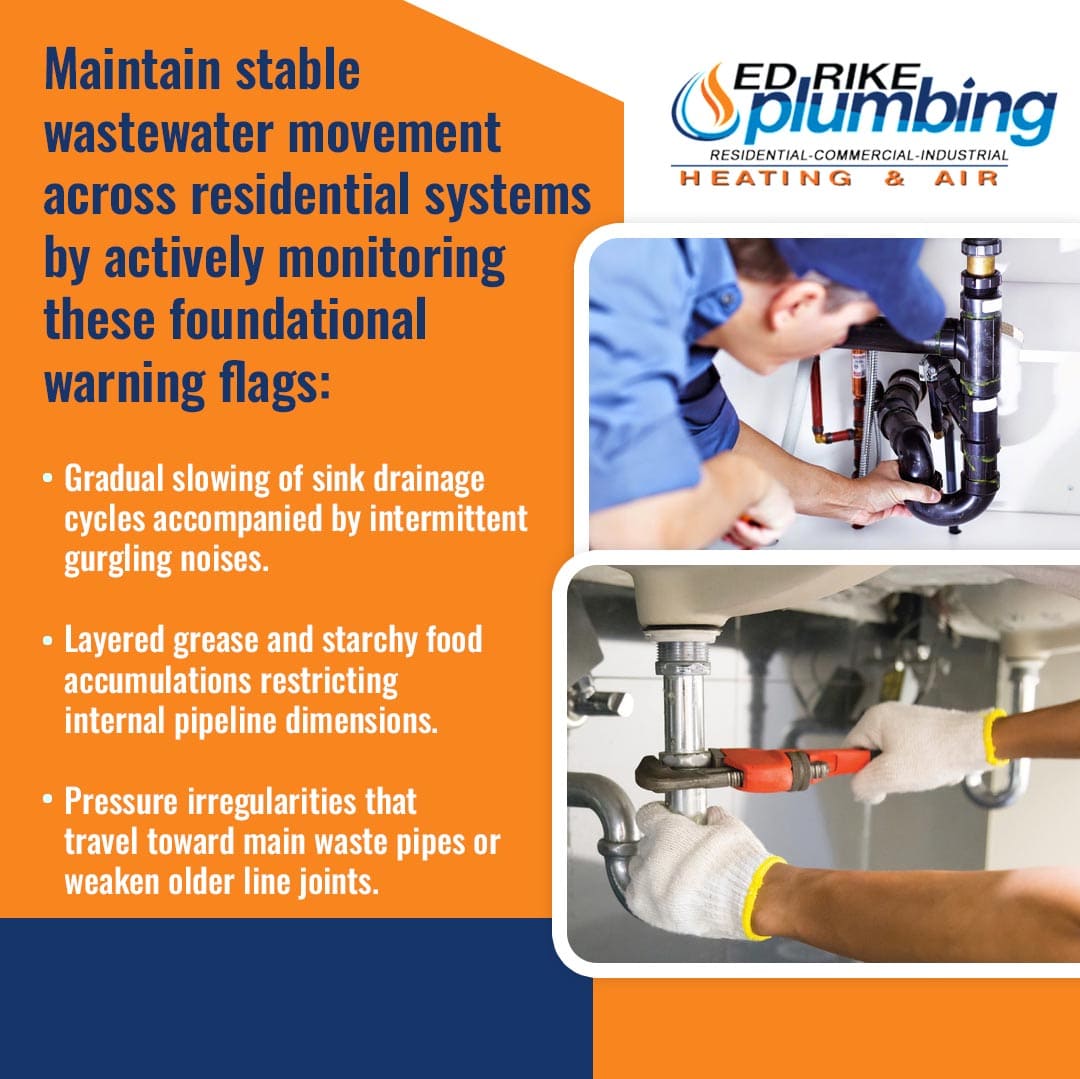
- Slow draining after running the disposal is one of the initial signs of a buildup forming in the drain line.
- Gurgling sounds coming from the sink after the disposal runs indicate air is being displaced by a blockage forming deeper in the pipe.
- Foul odors that linger even after running the disposal suggest food debris is trapped in the drain line and beginning to decompose.
- Water backing up into the sink basin means the clog has progressed, and water has nowhere to go.
- The disposal hums but does not grind; this typically means the motor is running, but the impellers are jammed.
- The frequent need to press the reset button on the bottom of the unit signals that the motor is overheating from repeated strain.
Any of these signs on their own may be manageable. Multiple signs at once usually point to a deeper issue that a technician needs to look at in person.
When Does a Clog Require Professional Drain Cleaning?
Some disposal clogs respond to basic troubleshooting. Pressing the reset button, clearing the P-trap under the sink, or running cold water through the unit for 30 seconds can resolve minor jams. These steps work when the problem is isolated to the disposal itself or the section of pipe directly beneath the sink.
Professional drain cleaning becomes necessary when:
- The drain runs slowly for more than a day or two after you clear the P-trap
- Water backs up every time the disposal runs, even with light use.
- You can hear gurgling in other drains when the disposal is on
- DIY methods provide only temporary relief before the problem returns
- There is standing water in the sink that will not drain at all.
At this point, the clog is likely past the P-trap and sitting deeper in the branch line or the main drain. A plumber can clear it using professional-grade equipment that reaches where household tools cannot.
Does a Disposal Clog Affect Your Dishwasher?
Yes, and this catches a lot of homeowners off guard.
Your dishwasher drains through the same line as your kitchen sink disposal. When a clog forms in that shared drain, your dishwasher may back up into the sink basin after a cycle, drain slowly, or leave standing water in the tub. If you notice water appearing in your sink when your dishwasher runs, the issue is almost always a shared drain blockage, not a problem with the dishwasher itself.
A plumber can clear that shared line and confirm both appliances are draining correctly before leaving your home.
Can a Garbage Disposal Clog Turn Into a Sewer Line Problem?
This is the part most homeowners do not expect.
When grease and food debris build up in your kitchen drain line, they do not stop there. Over weeks and months, that buildup travels deeper through your plumbing. It can eventually reach the main sewer line that carries waste from your entire home out to the city connection. Once the main sewer line is partially or fully blocked, the problem affects every drain in the house, not just the kitchen.
Signs that a clog has moved beyond the kitchen drain and into the sewer line include:
- Multiple drains in your home are backing up at the same time.
- Toilet water rising or gurgling when you run water elsewhere in the house.
- Sewage odors are coming from floor drains or lower-level fixtures.
- Water is backing up into a tub or shower when you flush a toilet.
These are not signs of a simple kitchen clog. They point to a main line problem that requires sewer line repair or hydro jetting to clear. Ed Rike Plumbing Heating & Air handles both services regularly across Dayton and the surrounding counties.
Drain Cleaning vs. Sewer Line Repair: What Is the Difference?
Homeowners often ask whether they need drain cleaning, sewer line repair, or both. The answer depends on where the problem sits in your plumbing.
Drain cleaning is the right call when the issue is isolated to one fixture. A slow kitchen drain, a backed-up sink, or a foul odor coming from one spot usually means the clog is in the branch line feeding that fixture. Snaking, augering, or hydro jetting can clear it without any major work.
Sewer line repair comes into the picture when the problem has moved deeper. If multiple drains in your home are backing up at the same time, or if you are hearing gurgling in toilets when water runs elsewhere in the house, the blockage is likely in the main sewer line. The same is true when sewage odors are coming from floor drains or lower-level fixtures.
A camera inspection is typically the initial step before any sewer line work begins. It gives our technicians a clear picture of what is happening inside the pipe, whether that is a grease blockage, root intrusion, a cracked joint, or a collapsed section. Treating a sewer line problem with drain cleaning alone only delays the real fix.
If you have called for the same backup more than once in a single year, it is worth having the line inspected properly rather than just cleared again.

What Leak Detection Has to Do With Drain Problems
Not all water damage from a clogged drain is visible right away.
As clogs build deeper in your pipes, pressure increases in the line. That pressure can stress pipe joints, cause slow seeps, or create small cracks, especially in older pipe materials. In Dayton area homes built before 1990, aging cast iron or clay pipes are more prone to this kind of wear.
If you notice water staining under the sink cabinet, moisture around the base of your kitchen cabinets, or an unexplained jump in your water bill, our team can perform leak detection to find out whether a drain issue has turned into a pipe leak. Catching it early keeps a small repair from becoming a large one.
How to Protect Your Disposal This Summer
Prevention is far simpler than repair. A few habits can cut the risk of a summer clog.
- Run cold water before, during, and for 30 seconds after using the disposal. Cold water keeps grease solidified, so it moves through the drain rather than sticking to the pipe walls.
- Feed food waste in small amounts rather than all at once. The disposal is designed for small scraps, not a full plate of cookout leftovers.
- Scrape plates into the trash before rinsing them in the sink. This takes the heavy work off the disposal entirely.
- Never pour cooking grease or oil down the drain. Let it cool in a container and throw it in the trash.
- Clean the disposal monthly by grinding a few ice cubes with cold water running. This keeps the grinding components clear and helps with odor.
None of these takes much time. They just take a little thought before the next cookout.
When to Call Us
If your kitchen drain is slow, your disposal is acting up, or you are seeing signs of a deeper problem, do not sit on it. A clog that starts in the kitchen can travel further than most people realize.
Ed Rike Plumbing Heating & Air has been serving Dayton and the surrounding area since 1992. We are veteran-owned and operated, and our technicians are state-certified with over 70 years of combined experience. We offer free estimates, straightforward pricing with no billing surprises, and honest advice; we will never recommend a service you do not need.
We serve Preble, Montgomery, Darke, Miami, Clark, and Greene Counties, with same-day service and 24/7 emergency response when you need it most.
Call us at (937) 962-2939 or email us at carrie.lunsford@edrikeplumbing.com to schedule our service.