When your heating or cooling system stops performing the way it should, the fix starts long before any part gets replaced. It starts with an accurate diagnosis. An HVAC contractor uses specialized tools to measure what your system is actually doing, not just what it looks like from the outside. These tools turn invisible forces like electrical current, refrigerant pressure, and airflow into real, actionable numbers.
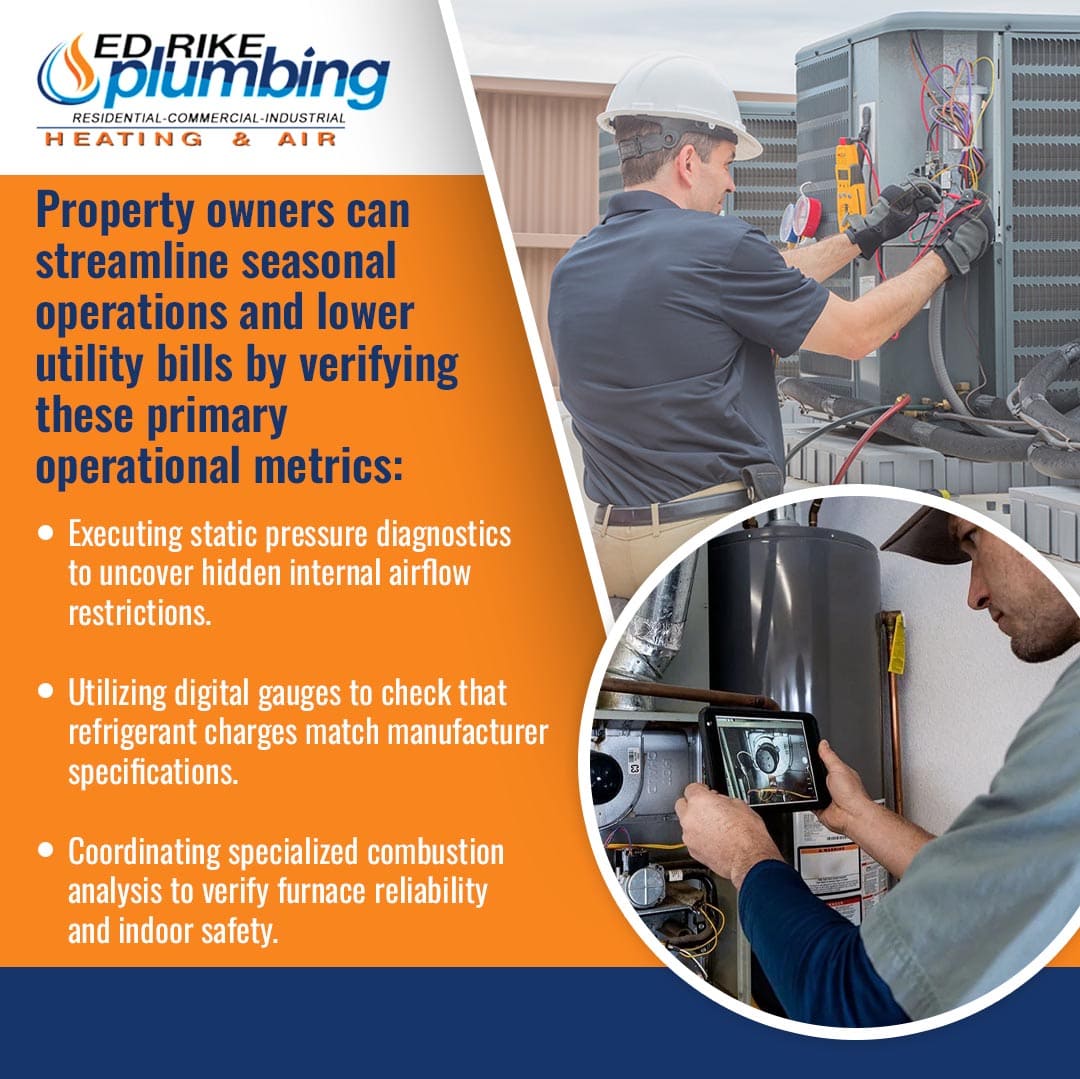
HVAC technicians rely on tools like multimeters, refrigerant gauges, manometers, and combustion analyzers to pinpoint exactly what is wrong with a heating or cooling system before recommending a repair. This data-driven approach, used by Ed Rike Plumbing Heating and Air in Dayton, OH, prevents guesswork, avoids unnecessary part replacements, and keeps your system running safely and efficiently.
Without that data, repairs become guesswork. And guesswork costs you time, money, and comfort.
At Ed Rike Plumbing Heating & Air, our licensed team has been delivering reliable HVAC services to homeowners and businesses across Dayton, OH, since 1992. We believe every customer deserves honest answers backed by real measurements. In this guide, we break down the diagnostic tools technicians use, what each one detects, and why that process directly affects the accuracy, efficiency, and lifespan of your system.
What Diagnostic Tools Do HVAC Technicians Actually Use?
Most homeowners assume an HVAC technician arrives, listens to the system, and figures out the problem. In reality, a thorough diagnosis involves multiple instruments, each measuring a different aspect of system performance.
Here is a quick overview of the core tools used in professional HVAC diagnostics:
| Tool | What It Measures |
| Digital Multimeter | Voltage, current, resistance, continuity |
| Refrigerant Manifold Gauges | Suction and discharge pressure |
| Manometer | Static pressure and airflow resistance |
| Combustion Analyzer | Flue gas composition, carbon monoxide levels |
| Clamp Meter | Amperage draw on motors and compressors |
| Hygrometer | Indoor humidity and temperature |
Each tool serves a specific purpose. Together, they give an HVAC technician a complete, data-driven picture of how your system is actually performing, rather than how it appears to be performing.
How Does a Multimeter Help Diagnose Heating and Cooling Problems?
Electrical issues are behind a large portion of heating and cooling failures. A digital multimeter is the most-used tool in any HVAC technician’s kit for exactly that reason.
A multimeter measures:
- Voltage to confirm power is reaching the system correctly.
- Amperage to check if motors and compressors are drawing within safe operating ranges
- Resistance and continuity to test wiring, relays, and circuit boards
- Microamps to verify flame sensor operation in gas furnaces
When a furnace fails to ignite or an air conditioner trips a breaker repeatedly, a multimeter helps trace the electrical path and identify the exact point of failure. Without it, an HVAC contractor is left guessing, and guessing leads to unnecessary part replacements and repeat service calls.
A clamp meter works alongside the multimeter. It measures amperage draw without breaking the circuit, allowing technicians to check whether a compressor or blower motor is operating within its rated limits while the system runs live.
Why Does Refrigerant Pressure Testing Matter for Your AC?
Refrigerant is the substance your air conditioning and heat pump systems use to transfer heat out of your home. If the charge is off, even slightly, your system loses efficiency and puts strain on the compressor over time.
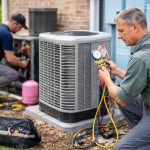
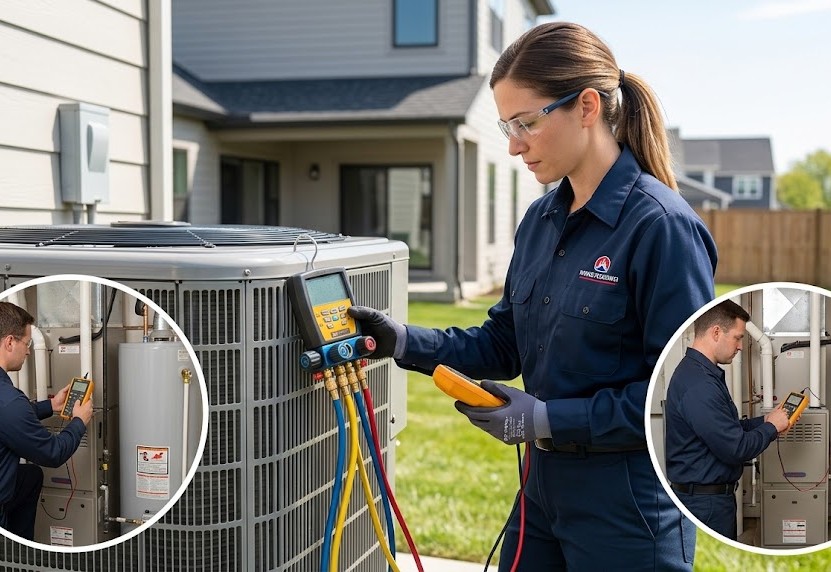
HVAC contractors use digital manifold gauges to measure both the suction pressure (low side) and the discharge pressure (high side) of the refrigerant circuit. From those readings, they calculate two values that matter a great deal:
- Superheat confirms that only refrigerant gas, not liquid, is entering the compressor. Liquid refrigerant entering the compressor can cause severe mechanical damage and, in some cases, lead to immediate compressor failure.
- Subcooling confirms that a full column of liquid refrigerant is feeding the metering device, which is what your system needs to run at peak efficiency.
If a technician adds refrigerant without taking these measurements, they are guessing at the charge. That approach can make your system perform worse, not better. Proper refrigerant work requires calibrated gauges and calculated readings, every single time.
Refrigerant system performance is evaluated whenever appropriate during air conditioning repair and maintenance visits. Our technicians are licensed and state-certified, so you can trust that the work is done right.
What Is Static Pressure and Why Does It Affect How You Feel in Your Home?
If you have rooms in your home that never seem to cool down in summer or warm up in winter, static pressure could be the reason. It is one of the most overlooked factors in heating and cooling performance, and it is something you simply cannot diagnose by feel alone.
A manometer measures static pressure, which is the resistance the blower fan has to push against inside your duct system. Think of it like blood pressure for your HVAC system. When that pressure is too high, the whole system strains.
High static pressure is often caused by:
- A dirty or overly restrictive air filter
- Undersized ductwork that cannot handle the airflow your system produces
- Closed or blocked supply and return registers
- A dirty evaporator coil is restricting airflow across the heat transfer surface.
When static pressure remains elevated, the blower system may operate less efficiently and experience increased mechanical or electrical stress, depending on the motor design. Energy bills climb. Comfort drops. And the lifespan of your equipment shortens. Catching this problem during a routine HVAC maintenance visit is far less expensive than dealing with a blower motor failure later.
HVAC contractors at Ed Rike Plumbing Heating & Air include airflow and static pressure checks as part of every heating and cooling maintenance visit. If your duct system is working against your equipment, we will find it.
How Does Combustion Testing Keep Your Gas Furnace Safe?
For gas furnaces and boilers, combustion efficiency is not just about energy bills. It is a safety issue. A combustion analyzer reads the composition of flue gases exiting the heat exchanger to confirm the system is burning fuel cleanly and safely.
This tool checks:
- Carbon monoxide (CO) levels in the flue gases
- Oxygen and carbon dioxide percentages
- Flue gas temperature
- Overall combustion efficiency
One of the most serious problems a gas furnace can develop is a cracked or compromised heat exchanger. Such defects can allow combustion byproducts to escape from their intended pathway and may create conditions that increase safety risks, including potential carbon monoxide exposure. A combustion analyzer provides measurable data that can help identify abnormal combustion conditions and may indicate the need for further inspection of the heat exchanger and venting system.
This is why fall furnace HVAC maintenance matters so much in Dayton. Our winters here in Ohio are no joke, and the last thing any family needs is a furnace running with a compromised heat exchanger. If your heating contractor is not running a combustion check during a furnace tune-up, it is worth asking why.
What Happens During a Professional HVAC Maintenance Visit in Dayton, OH?
A proper HVAC maintenance visit is not just a filter swap and a quick look around. When done right, it is a structured, top-to-bottom evaluation of your system. Here is what a thorough visit covers:
Electrical System
- Check voltage and amperage on all motors.
- Test capacitors and contactors for proper operation
- Inspect wiring for wear, corrosion, or loose connections.
Refrigerant Circuit (Cooling Season)
- Measure suction and discharge pressure.
- Calculate superheat and subcooling.
- Check for refrigerant leaks at coil and line connections.
Airflow and Duct System
- Measure static pressure
- Inspect and replace the air filter.
- Check supply and return registers for obstructions or damage.
Combustion System (Heating Season)
- Run combustion analysis on the flue gases.
- Inspect the heat exchanger for cracks or damage.
- Check the flue pipe and verify proper draft.
Controls and Thermostat
- Verify thermostat calibration and accuracy.
- Test all safety switches and limit controls.
- Confirm system cycling behavior matches expected operation.
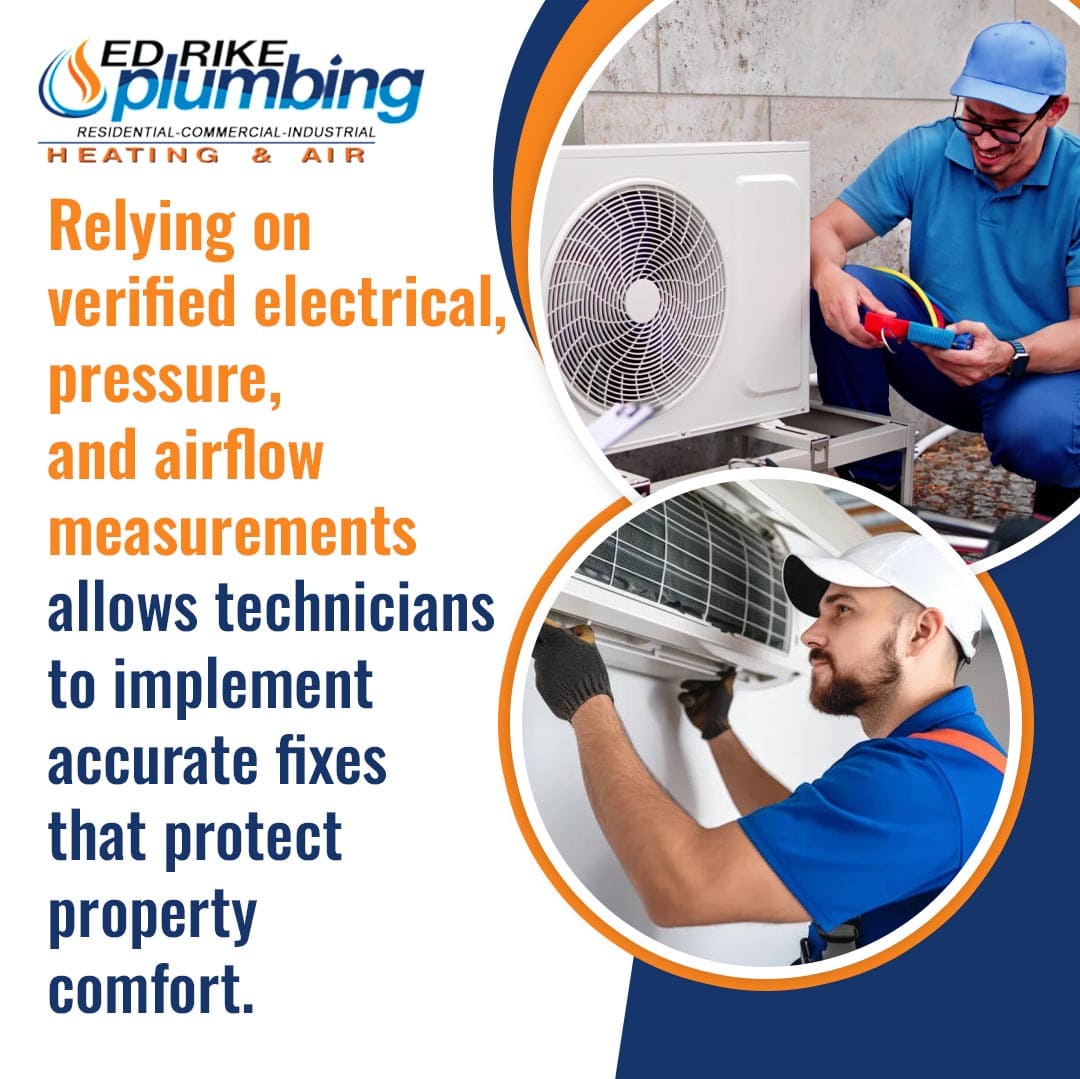
When your technician works through this list with proper tools and records real measurements, you leave the visit knowing the actual condition of your system. Not an estimate. Not an impression. Actual data.
What Makes a Trustworthy HVAC Company in Dayton, OH?
This is a question worth asking before you book a service call. Not every HVAC company approaches diagnostics the same way. Here are signs that a technician is doing the job properly:
- They arrive prepared with a full set of diagnostic instruments.
- They measure refrigerant pressure before adding or recovering any refrigerant.
- They test static pressure when you report uneven temperatures or high energy costs.
- They check electrical readings on motors before declaring them operational.
- They walk you through their findings and explain what the numbers mean before recommending any repair.
A professional technician should never recommend a repair without being able to show you the measurement that supports it. If someone suggests a part replacement without running any diagnostics, that is worth questioning.
At Ed Rike Plumbing Heating & Air, honesty is not just something we say. It shapes every service call our team makes. We will never try to upsell you on a service you do not need. Our technicians take the time to explain what they found, what it means, and what your actual options are. That is what over 30 years of delivering HVAC services to Dayton homeowners and businesses looks like in practice.
We are a veteran-owned HVAC company, A+ rated by the Better Business Bureau, and our team brings over 70 years of combined experience to every job. We serve Dayton and nearby areas across Montgomery, Preble, Miami, Darke, Clark, and Greene Counties.
Why do HVAC technicians need diagnostic tools instead of just inspecting the system?
Diagnostic tools measure things you cannot see or feel, like refrigerant pressure and electrical current, so technicians can pinpoint the actual cause of a problem instead of guessing.
What is static pressure and why does it matter for my Dayton home?
Static pressure measures the resistance air faces moving through your ductwork, and when it is too high your system strains, your energy bills rise, and rooms cool or heat unevenly.
How do I know if my HVAC technician is doing a thorough diagnostic check?
A thorough technician arrives with tools like a multimeter, manifold gauges, and a manometer, takes real measurements, and explains those readings before recommending any repair.
Schedule Your HVAC Services in Dayton, OH
Whether your system is making unusual noises, struggling to keep up with the season, or you just want a reliable checkup before things get worse, a proper diagnostic visit gives you real answers from people you can trust.
Call Ed Rike Plumbing Heating & Air at (937) 962-2939 or email us at carrie.lunsford@edrikeplumbing.com to schedule your HVAC services today. We offer same-day service, 24-hour emergency availability, and straightforward pricing with no billing surprises. New customers save $25 OFF their initial visit.
We proudly serve Dayton and nearby areas throughout Preble, Montgomery, Darke, Miami, Clark, and Greene Counties.